Showing posts with label back pain. Show all posts

Wednesday, February 26, 2020

Moving When It Hurts

Over the past 13 years and 25,000 Physical Therapy sessions, I have treated many patients who are afraid to move through pain. Let's consider the patient with chronic pain who has had pain for more than five years related to a work injury or a car accident. There is no question that they are experiencing pain, and in some cases they have severe pain. But some individuals get into the habit of fearing pain and therefore fearing any movement that causes pain. These people sometimes stop moving altogether. 

Have you met people who are sedentary all day? They can't work because they are disabled or retired or any other reason, and they literally can't, won't or don't do anything. They sit down or lie down all day. They only leave the house for doctor visits. They don't go out for leisure or social time or hobbies or anything at all. 

I encouraged a patient today to just start walking, even if it is for a few minutes at a time. Of course, she voiced concern that it makes her back hurt. So I explained that a walking program is not going to make her back worse overall. She will not gain more damage to her spine by walking, but she will cause more damage by the overall lack of movement of her spine. 

To clarify, this is not referring to patients with a brand new back injury or current flare-up. Most of you know someone who has "thrown his/her back out." In that situation, there may be a few days or weeks in which he/she can barely walk and cannot stand up straight. I would not tell that patient to start a walking program today. 

However, if someone you know has chronic pain but has stopped moving for many months or years, he/she likely needs physical activity. If you are not sure where to start or what movements are safe, come see your local Physical Therapist!

Friday, April 19, 2019

Postures and Low Back Muscle Strain

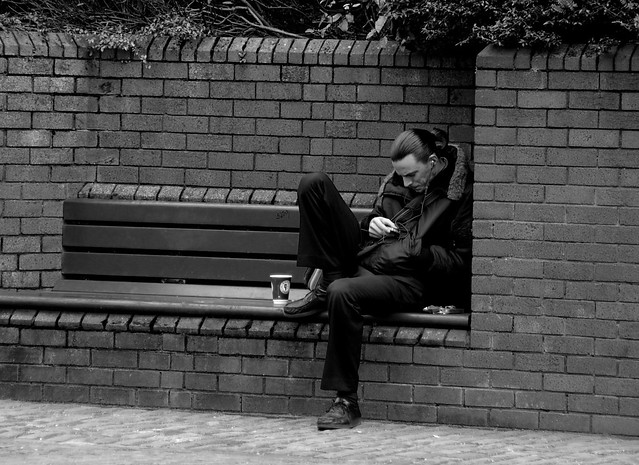
Photo by Larkery
One cause of low back muscle strain is having an unhealthy spine through habitual poor posture. If you sit all day in a slumped position, your low back is loaded into a forward or flexed position, and the muscles of your back are continually stretched. As a result, you may be more likely to strain a back muscle from light tasks such as loading/unloading the dishwasher. 

Not only does slouching affect your back muscles, but it causes your disks to bulge backwards. The more pressure from bad posture, the more likely your disks cannot realign properly. This leads to pinched nerves, which shoot pain or other symptoms down your leg(s), such as sciatica. 

On the other hand, those with a healthy spine (through repetitively good posture and exercise) may tolerate light tasks but strain their backs when doing more strenuous work such as moving furniture. It is important that both individuals practice good posture and body mechanics in order to avoid straining the low back during routine daily tasks, and especially during difficult physical activities.

Wednesday, February 21, 2018

How To Treat Back Pain At Home

Throwing your back out is a painful scenario that is actually quite common. It is typical for someone with an acute episode of back pain to tell me:

"I bent down to..., but I could not stand back up."
"I stood up after bending down, but immediately I knew something was wrong with my back." 
"I twisted my back and quickly felt severe back pain."
"My back has been hurting since I was moving a lot of stuff around recently."

What To Do For Acute Back Pain:
Step 1. Decide if it is serious enough to see a doctor immediately.

Reasons To See a Doctor Immediately For A New Back Injury:
1. You can barely walk.
2. Your pain is so severe that no over-the-counter medicine is helping.
3. You experienced major trauma to your back.
4. The injury caused you to lose sensation in your pelvis or legs.
5. The injury has changed your ability to control your bowel/bladder function.
6. You have noticeable weakness in one or both legs as a result of your injury.

Home Treatments For A New Back Injury:
1. Ice. Ice down your back or the painful area for 10-20 minutes at a time, throughout the day.
2. Over-the-counter Pain Medicine, preferably an anti-inflammatory (Advil, Aleve, Ibuprofen).
3. Rest. Find the most comfortable positions and avoid aggravating movements.
4. Time. If it is not a major injury, it should progressively improve over the next few weeks.

Should You Immediately See a Chiropractor For a New Back Injury?
Seeing a chiropractor may be a good option if you have one that you know and trust. Ideally, go to one that has successfully treated you in the past. They can rule out red flags and tell you if/when to see a physician. If your pain is not improving with chiropractic treatment, do not continue for more than 3-4 weeks.

Should You See a Physical Therapist For a New Back Injury?
Yes! However, most Physical Therapists require a doctor's prescription before beginning treatment, so be sure to ask your doctor for this. In my experience, most patients with a new back injury will significantly improve within 1-2 weeks of PT, and many patients will get immediate pain relief within the first visit. If your pain is not improving within a month of PT, follow up with your doctor for further testing or treatment options.

Sunday, January 28, 2018

What To Do for Sciatica in my Leg

Photo: John Ragal
There are multiple causes of sciatica or back pain that radiates down the leg(s). The most serious cause of sciatica is when a nerve root in the spine is being pinched by a bulging disc or by arthritis-type changes in the spine itself. Not only can this cause shooting pain into the leg(s) but also weakness in the leg and changes in the sensation in the leg (for example numbness or tingling in a portion of the leg or foot). If this is the case, it would be diagnosed through MRI and treatment options would be recommended by your doctor. 

Physical Therapists treat many patients with such sciatica. The key to relieving this type of sciatica is to stop the compression of the nerve root in the spine where it is being pinched. This can be done through positioning and exercises. If you are completely compliant with Physical Therapy and get no relief from any sciatica symptoms, then your doctor may try injections (usually with Cortisone) to provide some pain relief. This is a steroid, which provides an anti-inflammatory response. If you do not want injections, you may be prescribed oral medications for pain relief and/or anti-inflammation. 

Other conservative treatments for sciatica are going to a chiropractor, mechanical lumbar traction (requires a MD prescription) or getting acupuncture. Also some people get relief from inversion tables. Aquatic Physical Therapy (doing therapy inside a swimming pool) is another helpful tool for patients with sciatica.

Wednesday, April 9, 2014

Why You Should Get Physical Therapy For Your Back Pain

I recently treated a patient with leg pain that radiates from his back. It goes into his thighs and even down below his knees. This pain began 3-4 months ago, and he is unsure how it started. Before his session, I knew his walking had been problematic because when he stood up in the lobby, he significantly stooped over and could barely get his balance. He was using furniture and walls to hold onto. So my initial goal was to find an exercise that would immediately improve his ability to stand up and walk. 

I treated him for 10 minutes with one or two exercises lying on the mat. Then he stood up tall and walked easily back to his chair. He could not believe he was walking that well because since his symptoms began, he has the most pain and difficulty with initially getting out of a chair to walk.

So if you have back pain, you could possibly be only a few minutes away from pain relief. Schedule your Physical Therapy today!


Tuesday, March 25, 2014

Changing Crib Sheets Without Pain

There are a few baby-related tasks that can be near-impossible without straining your back, so here is what I do for changing crib sheets.

Photo: National Media Museum

1. Buy at least 3-4 crib sheets and 3-4 waterproof pads. I promise that the price of these is far less than a back injury.

2. Take the mattress out of the crib to change the sheets.

3. Layer your waterproof pads and crib sheets over each other so that when the top layer gets wet, you simply remove it and your clean, dry one is already there.

4. As soon as possible, remove the bumper pads. For safety reasons, they are not even recommended anymore. Changing the crib sheet is much easier when there are no bumper pads in the way.

5. Consider using a sheet saver. It is a sheet that actually attaches to the bars of the crib, so it is fairly easy to snap on or off (each sheet has at least 12-15 snaps). There are some safety concerns with this because it does not fit as tightly as a fitted sheet. To get it on or off, it still takes several minutes, and you have to be able to reach all four sides of the crib.

6. For crib sheet selection, buy the T-shirt material ones that stretch a little.

7. Change the sheets for a toddler bed the same way--by taking the mattress out first.

Monday, March 10, 2014

Unexplained Arm and Leg Symptoms

This post is about Central Cord Syndrome; please see the article from my last post for reference.

There is one diagnosis that is often not discovered until it is too late. It is called central cord syndrome or central cord compression. Your spinal cord is being compressed within a part of the neck, so you experience not only neck/arm symptoms but other symptoms in the lower body as well.

Neck Pain
Usual neck problems can cause neck pain and/or refer pain to the shoulder or down the arm. If this is your only symptom, you likely do not have anything compressing your spinal cord in the neck. You may have a neck diagnosis that can be treated with usual medical treatments such as medicine, Physical Therapy, injections, surgery, or other alternatives.

Back Pain
Similarly, low back problems can produce back pain and symptoms radiating into the buttock(s), hip(s) and/or leg(s). If this is your only symptom, you likely do not have Central Cord Syndrome. I highly recommend you request a prescription for Physical Therapy from your doctor in order to treat your back/leg symptoms.

Neck/arm AND Back/leg Symptoms
If you have neck/arm symptoms AND leg symptoms at the same time, you may need further medical attention quickly! Some leg symptoms are: difficulty walking, progressive loss of balance/falls, leg pain, and numbness/tingling in the leg. Other symptoms include loss of bowel/bladder control/function and/or loss of sensation in the pelvic region.

Examples:
1. You have a neck injury that appears to have resolved. But now you have progressive weakness in one or both of your legs.
2. You have knee pain that started without a knee injury. Actually it started around the time that you were in a car accident and hurt your neck. It keeps getting worse despite treatment for knee pain.
3. You have what feels like carpal tunnel syndrome in your hand(s). It has been going on for several years but is not improving with treatment. Also, your neck hurts and you have numbness in your leg(s) during the same period of time.
4. You have been treated for neck pain and it is mildly improving, but you recently notice that you cannot control your bladder like usual.
5. You have a neck injury that radiates pain and tingling down your arm. You did not notice at first, but you feel the same symptoms in your leg(s), which began at the same time.

Neck/Back Pain
If you have both neck/arm symptoms and back/leg symptoms that began at different times, then you may have 2 different problems that need to be diagnosed/treated separately. In this case, be sure to inform your doctor about all your symptoms so he/she can rule out a more serious problem such as Central Cord Syndrome.

Thursday, February 20, 2014

Which Health Professional Should I See?

If you are experiencing pain or have an injury, there are many options for health professionals to treat your painful condition. So who should you see first? Going to your family doctor is usually the best first step, and he/she will direct you with initial treatments and referrals. However, sometimes you can go straight to another health professional or ask your doctor for a referral to someone on this list. I selected these few to emphasize because many patients have asked me about these options.

1. Physical Therapist: joint pain, new injury, old injury, chronic pain, weakness, balance/walking issues, shoulder pain, elbow pain, neck pain, mid back pain, low back pain, sciatica, pelvic pain, hip pain, knee pain, ankle/foot issues, gross motor delays in babies or children, muscle pain/strain, neurological injury (such as a stroke) 

2. Occupational Therapist: pain/injury of any part of the arm/hand, difficulty with fine motor tasks, hand/arm weakness, difficulty performing usual daily tasks, neurological injury (such as a stroke), developmental delay in babies or children

3. Chiropractor: new episode of spine pain, car accident, whiplash, chronic back pain, some areas of joint pain, alignment issues, low back/pelvis pain, sciatica

4. Massage Therapist: fibromyalgia, chronic pain, tight muscles, stress


MD Specialists for some common painful conditions:

1. Neurologist: nerve problems (numbness, tingling), neuropathies, neurological conditions (stroke, TIA, MS), unexplained weakness

2. Pain Management: chronic pain, need for injections (such as Cortisone), back pain

3. Orthopedist: specific for each joint. For example, find a shoulder specialist/surgeon if you have shoulder pain.

4. Neurosurgeon: new or chronic spine pain that may radiate away from the spine into the arm(s) or leg(s)


Always remember that you can choose your own health professional just like you select your pharmacy. Even if your doctor refers you to a specific therapist or specialist, you can request a referral to someone of your choice.

Thursday, January 2, 2014

Twisting and Back Pain, Joint Pain

Photo: joystiq.com


Twisting one of your joints in an awkward way is an easy recipe for injury, especially in the low back, shoulder, knee and ankle.


How To Avoid Twisting Your Back:
Turn your entire body by turning your legs.
Change positions in order to reach the object with ease.
Turn toward the object, then squat down.
Don't be afraid to get down onto your hands and knees to reach for something.

How To Avoid Twisting Your Shoulder:
Don't reach for objects in the backseat of the car.
Don't reach for an object behind you when you are sitting; simply turn around.
Don't close heavy doors carelessly.
Turn your body toward the object you are reaching for.
Keep your arms as close to your body as possible when reaching.

How To Avoid Twisting Your Knee:
Be cautious when playing sports.
Use a knee brace when playing sports if you have had a past knee injury.
Take time when turning around.
Don't turn your body if your knees are locked.

How To Avoid Twisting Your Ankle:
Use an ankle brace for your sport if you have twisted or sprained your ankle in the past.
Be extra cautious when walking, hiking or jogging on uneven terrain.
Try to avoid walking on ice. If it is icy, stay indoors (especially if you live in the South).
Watch where you are walking. Prevent falls by not doing 5 things at once.

Wednesday, October 9, 2013

Best Book for Self-Treatment of Painful Joints

Do you have joint pain that you cannot afford much medical treatment for? Robin McKenzie, a world-famous Physical Therapist and bestselling author, wrote a series of books about self-treating pain in various joints. I would highly recommend any of these if you have pain but cannot afford much therapy or other treatments.

Treat Your Own Back
Treat Your Own Neck
Treat Your Own Knee
Treat Your Own Shoulder

There may be various editions of these. I would recommend looking at Amazon or other websites to find the best prices, but you should be able to purchase one for $10-$15.

For more of McKenzie's exclusively-designed products such as lumbar rolls and pillows, check out OPTP.com.

Of course, if you have serious joint pain that is not resolving, please see your physician and request a prescription for Physical Therapy.

Monday, April 29, 2013

Low Back Pain: Treat With One Exercise

Photo: Chakra-Jnana Yoga/Facebook
Backbends. Stand up, put your hands on your hips or low back, and bend backwards (obviously not beyond a comfortable stretch), likely around 30 degrees. Hold 1 second, then return to upright. Repeat 5-10 times. This is the single best exercise for the majority of patients with low back pain, and the following explains why.

1. Convenience. You can do this exercise anywhere to treat or prevent low back pain. It does not require equipment or even lying down. While there are various forms of back extension (lying on your tummy and pressing up onto forearms or hands, lying on your back and lifting your hips into a bridging position, various yoga poses, etc), this exercise is the easiest one to perform no matter where you are.

2. Back Extension Exercise helps 70% of patients with Low Back Pain. Moving your lower spine into a backward-bent position (arched) is one of the most effective ways to undo the force of continual forward bending and slumping that we all perform excessively every day.

3. Back Extension treats Low Back Injury which occurred in a flexed (forward bent) position. If you have Low Back Pain which began with a specific injury or traumatic event, think about the position of your back at that time. Were you lifting something? Bending forward to pick up an object? If forward movement caused your injury, back extension may be the direction of exercise to treat it. Even if you were injured in another way, this still is the direction of force that the majority of patients with low back pain need in order to minimize symptoms.


Caution: This exercise is not safe or appropriate for all individuals, so consult your physician first, especially if you have low back problems, painful medical conditions, balance problems, or anything else that may inhibit your safety. If performed in a gentle way, it is likely safe for most individuals without low back pain. No one should perform this forcefully or into an excessively far backwards position.

If you have low back issues and have not seen a Physical Therapist, ask your doctor for a referral/prescription, and find a spine PT near you!


Reference: McKenzie, Robin. Mechanical Diagnosis & Therapy: Lumbar Spine. 2009: The McKenzie Institute International, Part A.

Further reading: McKenzie, Robin. Treat Your Own Back, 9th ed. 2011: OPTP.

Wednesday, April 17, 2013

Back Health Survey: Am I At Risk For Low Back Pain?

1. How frequently do you perform moderate-high intensity exercise?
     a. 5-7x/week
     b. 2-4x/week
     c. 1x/1-2 weeks
     d. rarely

2. How many hours/day do you sit on most days of the week?
    a. <4 hours/day
    b. 4-6 hours/day
    c. 7-10 hours/day
    d. >10 hours/day

3. How often do you perform back strengthening exercise or core strengthening?
    a. >3x/week
    b. 1-2x/week
    c. occasionally
    d. what do you mean by back or core strengthening exercise?

4. What is your usual sitting posture?
    a. upright, with extra lumbar support (lumbar roll, rolled towel, etc)
    b. upright, without lumbar support (decent chair but no additional lumbar roll or cushion)
    c. mildly slumped
    d. severely slumped or rounded

5. What is your present weight status?
    a. ideal body weight
    b. mildly overweight
    c. moderately overweight
    d. severely overweight

6. How many episodes of major low back pain have you had in your lifetime (enough to limit your usual functional activities)?
    a. no major episodes
    b. 1 major episode or injury
    c. 2-3 episodes
    d. >3 episodes

7. How far down did your low back pain symptoms radiate?
    a. no major low back pain in my past
    b. low back only
    c. low back and buttock(s)
    d. down to thigh (not below knee)
    e. down below the knee

8. How did your low back pain resolve?
    a. no major low back pain in my past
    b. completely resolved
    c. partially resolved
    d. never resolved

9. How often do you practice proper body mechanics during daily activities (such as squatting instead of bending, avoiding twisting, and good lifting techniques)?
    a. All the time; with both difficult and easy tasks
    b. Most of the time, especially difficult tasks
    c. Sometimes
    d. Rarely

10. How much heavy lifting do you regularly perform?
     a. occasionally-rarely. Always with good technique
     b. frequently. Always with good technique
     c. occasionally-rarely. Without considering technique
     d. frequently. Without considering technique

11. How often do you participate in high risk sports/activities (such as skiing, skydiving, skateboarding, 4-wheeling, etc)?
      a. rarely and not likely to in the future
      b. once every few years
      c. multiple times per year
      d. very frequently

12. How often do you perform standing forward bending exercises (such as touching the toes)?
      a. never. not since elementary school calisthenics
      b. occasionally, when I need to stretch my back
      c. frequently, during my usual workouts
      d. daily or multiple times daily


Score: Count your score by assigning points to each letter answer.
Legend
a: 0 points
b: 1 point
c: 2 points
d: 3 points
e: 4 points


Results:
>30 points: Get to know your Physical Therapist and spine surgeon. You will be seeing us a lot.
20-30 points: Moderate risk unless you make major changes immediately.
13-20 points: Mild-moderate risk. Consider ways to improve!
6-12 points: Mild risk. But beware and don't become complacent in these areas.
0-6 points: You have a healthy back and are at low risk as long as you continue good habits!

Tune in next time for more discussion about these questions/answers!

Post your answer in the comments section. There will be three prizes awarded!


Friday, April 12, 2013

Low Back Muscle Strain

Causes of Low Back Strain: 
One very common form of low back pain is due to a low back muscle strain. This usually occurs because of improper lifting, sports activities, twisting of the back, car accidents, or improper strengthening. General workout activities can contribute, such as a challenging exercise class, machine weights or free weights.  In these cases, one or several muscles of the low back are strained through over-stretching, over-contracting, moving too quickly, twisting or pulling. The muscles have a strain placed on them when they are in an awkward position or there is a traumatic force on them if they are in a neutral position.

Postures and Low Back Pain:
Another cause for low back muscle strain is having an unhealthy spine through habitual poor posture. If you sit all day in a slumped position, your lumbar spine (low back) is loaded into a forward or flexed position, and the muscles of your back are continually stretched (elongated). As a result, you may be more likely to strain a back muscle from light tasks such as loading/unloading the dishwasher. On the other hand, those with a healthy spine (through repetitively good posture and exercise) may tolerate light tasks but strain their backs when doing more strenuous work (ex: heavy yardwork). It is important that both individuals practice good posture and body mechanics in order to avoid straining the low back during routine daily tasks, and especially during difficult physical activities.

Treatment of Low Back Strain
Low Back Muscle Strain should first be treated with ice for at least 2-3 days. If you see a doctor, you will likely be prescribed a muscle relaxer, anti-inflammatory, and/or pain reliever. Other treatments are rest, ice/heat, massage, and Physical Therapy. Depending on the severity of the muscle strain, you may have pain for a few days to several months. This type of LBP can be prevented by maintaining proper posture/body mechanics, proper lifting, regular exercise, caution with sports activities, and maintaining a strong core.

Wednesday, April 10, 2013

Laptop Ergonomics Video

This video gives you some ideas for how to improve your posture and positioning when working on the computer. It is very brief (2 minutes).

Tuesday, April 9, 2013

Back Pain Prevention: Avoid Twisting

Never twist your body when holding something. It is common for me to ask a patient with low back pain how he hurt his back and he responds that he was holding a heavy box and twisted his back. This is one common way to cause a disc in the low back (lumbar spine) to bulge or herniate, which is a very common diagnosis in PT clinics. The complication associated with disc problems is that if a lumbar disc bulges out of its normal position, it can compress the nerves in the spine, causing pain and other symptoms into the leg or legs. It is much easier to prevent a disc herniation than to treat one after it occurs!
            One common way for this to happen is while doing the laundry. Many people twist their bodies when putting clothes from the washer into the dryer. This is worsened because they are holding wet clothes while twisting their backs, causing more injury than if nothing were held. Instead, step over to the dryer, then squat to throw the clothes in. It takes a conscious effort every time, but just remember "step, squat, and toss." It only takes one wrong twist to cause low back pain which could last for months or years, so avoid twisting—every time!
         Here is a video showing what not to do. I posted it a year ago, but it's funny and worth another viewing.

Friday, April 5, 2013

Back Pain Prevention: Proper Lifting Techniques

Photo: New York Public Library

Never lift an object if you are in a forward bent position. The picture here shows a proper squat in order to reach down to the floor. Your spine is a perfectly stable system of bones (vertebrae) with discs in between each one. This system is designed to support your body weight and has the capacity to support much more weight (for example, carrying furniture) if the spine is maintained in its neutral position. (Note, it is not designed to support excessive body weight). The neutral position of the spine is when each vertebra is stacked on the one above it, which happens when you are demonstrating proper posture. You lose the stability and strength of the spine when you are twisted or bent, which removes the vertebrae from their properly stacked resting position. When this occurs, the muscles of your back have to be used in a way they were not made for. Why not use the stability of your spine when you lift instead of straining weak back muscles? 

Back muscles can be strengthened, but strong back muscles alone cannot prevent back injuries when your spine is in a compromised position, such as bent forward. Instead, it is best to lift when your back is straight and you use your legs to do the work. This involves squatting down but maintaining a straight back position. Our leg muscles are very strong and large and are made to do the work of lifting heavy objects, if we use our legs instead of our backs. If you are familiar with weight lifting, squatting is the exercise in which one can lift the most weight, compared to dead lifts, bench press, etc. This is because the thighs and buttocks have huge, powerful muscles, which are much less prone to injury. I rarely see patients for quadriceps (anterior thigh muscle) or gluteus maximus (buttocks muscle) strains whereas low back strains are very common in outpatient PT clinics.

Tuesday, May 15, 2012

What Your Toothbrush Tells You About Back Pain

Where do you store your toothbrush? Most of us store it right on the bathroom sink. Why do you store it there? Why don't you store it up on the top shelf or down in the bottom drawer? Your answer gives a simple example of BODY MECHANICS! You store your toothbrush within close reach to make life easier and more convenient. Why bend if you don't have to?

BODY MECHANICS is using your body to its advantage so that you don't have to work harder than necessary for whatever task you are doing. Here is another example. Ladies: why don't you carry your heavy purse by holding it with 1 or 2 fingers? You have naturally learned that the easiest way to carry a large handbag is strapped over your shoulder. 

We all practice good body mechanics with things like where we place our cups/plates/silverware in the kitchen, where we put our socks in our drawers and where we position our debit cards in our wallets. We want easy access to the objects that we use the most every day. So good body mechanics comes naturally...until we deal with our backs. We use our backs for things that our legs and arms should do, such as lifting and bending. Our leg muscles are massive and powerful and can do much heavier lifting than our back muscles. And our shoulder and arm muscles are very strong and able to lift, carry or hold significant amounts of weight.

So to prevent back pain, keep your back straight and use your legs more. Try squatting down using only your legs (maintaining a straight spine position) the next time you need to reach down toward the floor. Here is one easy way to demonstrate bad body mechanics: hold one arm straight out in front of you (with elbow straight) and place a dictionary or phone book in your hand. Time yourself to see how long you can keep it there.